

Overview
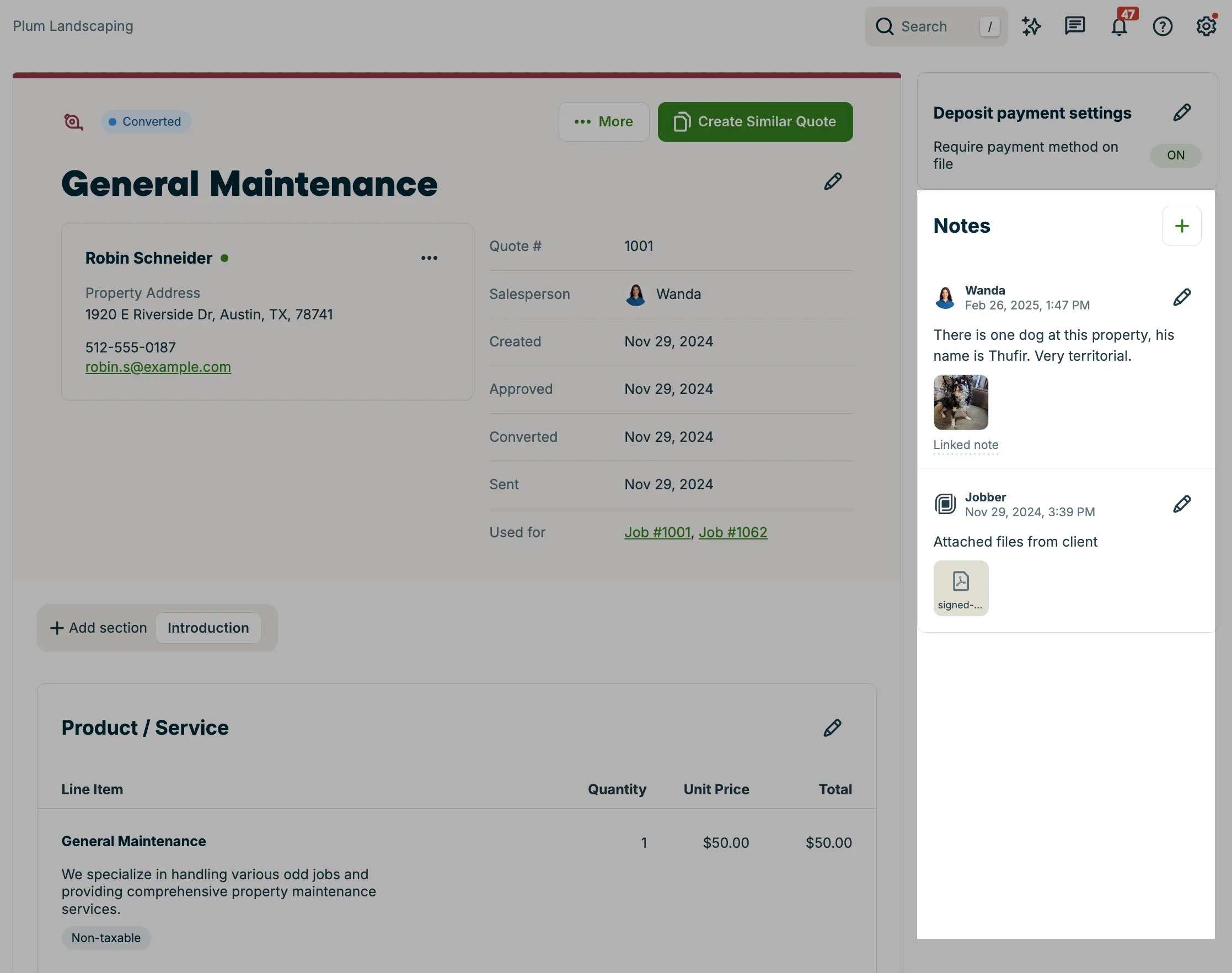
Notes help you keep track of important details about your clients and the work you’re doing in Jobber. You can add notes to clients, requests, quotes, jobs, and invoices to record information like customer preferences, job details, or internal reminders for your team. You can also upload attachments such as photos or documents, view GPS waypoints, and pin important notes so they’re easier for your team to find.
When adding a note, you can choose whether to link it to other items in your workflow. Linked notes appear on related items, helping your team see important information wherever they’re working.
On the Plus Plan, notes and attachments will also appear in the files and media section of a client’s profile so that all the client’s files live in a central location.
How to add a note
Notes can be added from both Jobber.com and the Jobber app.
Notes on Invoices
On select plans, you can also add images and attachments directly to an invoice itself — separate from the internal notes field. Files added this way are tied to the invoice rather than a note, and appear as named links in the invoice PDF with a link to client hub. Plus plans also have a feature to select notes captured earlier in your workflow.
Add a note from Jobber.com
To add a note:
- Start by navigating to the client, request, quote, job, visit, or invoice where you’d like to leave the note.
- Locate the notes field on that page:
- On the client’s profile, the internal notes and attachments section is located along the right side of the page, below the client’s billing history and saved payment methods.
- Notes fields also appear on requests, quotes, jobs, and invoices. The note field may be along the right side of the page, or at the bottom.
- From the Notes section, click the Plus icon.
- Enter the details of your note.
- (Optional) Add attachments, such as photos or files.
- Click Save.
Add a note from the Jobber App
- Open the Jobber app.
- Navigate to the client, request, quote, job, visit, or invoice where you’d like to leave the note.
- Tap the Notes section.
- Tap Add note.
- Enter your note details.
- (Optional) Add photos or attachments.
- Tap Save.
Learn more about Notes and Attachments in the Jobber App
Anatomy of a note
Once a note has been saved, it appears as a card in the notes section where it can be viewed by team members with permission to access notes. Each note includes several elements to help you understand when it was created and what information is attached.
A note may include:
- Author and timestamp: At the top of the note you’ll see the team member who created the note and when it was added.
- Edited indicator: If a note has been updated after it was created, an Edited label appears beside the timestamp of the original note.
- Note content: The main text of the note.
- Attachments: Images or files added to the note appear below the note text.
- Linked items: Notes can show where they are linked in your workflow (for example, to a job, request, or other records).
- GPS waypoint: If the note was added from the Jobber app, a GPS indicator will show the location where the note was created.
Select an attachment to open it in a gallery in full size.
Upload attachments on notes
Files, including images, can be attached to notes in Jobber. Adding notes and attachments helps you keep important information connected to your clients and work.
When adding attachments, keep these size limits in mind:
- 500 MB per file when uploading attachments to notes in Jobber.
- If you are sending the attachment as an email, there is a 10 MB file limit across all attachments.
The 10 MB email limit is in place because many common email providers only support attachments up to this size. Keeping attachments within this limit helps ensure recipients can successfully receive and open the files.
Note: If you have than 100 notes on a single item (for example, a client or a job), only your 100 most recent notes will be visible on that item.
Supported attachment file types
Supported file types for attachments on notes include:
- .csv
- .doc and .docx
- .txt
- .ppt and pptx
- .mp4
- .jpeg
- .png
- .gif
- .webp
- .avif
- audio files including:
- .aac, .mp3, and .wav
Image attachments on notes
Images can be saved as an attachment on the note. When there are multiple images saved in a note, click on an image to open it. Then select the arrows to scroll through the the images as a gallery.
To download an image saved as a note, click the image to open it, then right click the image, then select Save Image.
If you need to print an image that’s been saved as an internal note:
- Right click the image from the note, then select Open in New Tab.
- From the new tab, select File, then select Print.
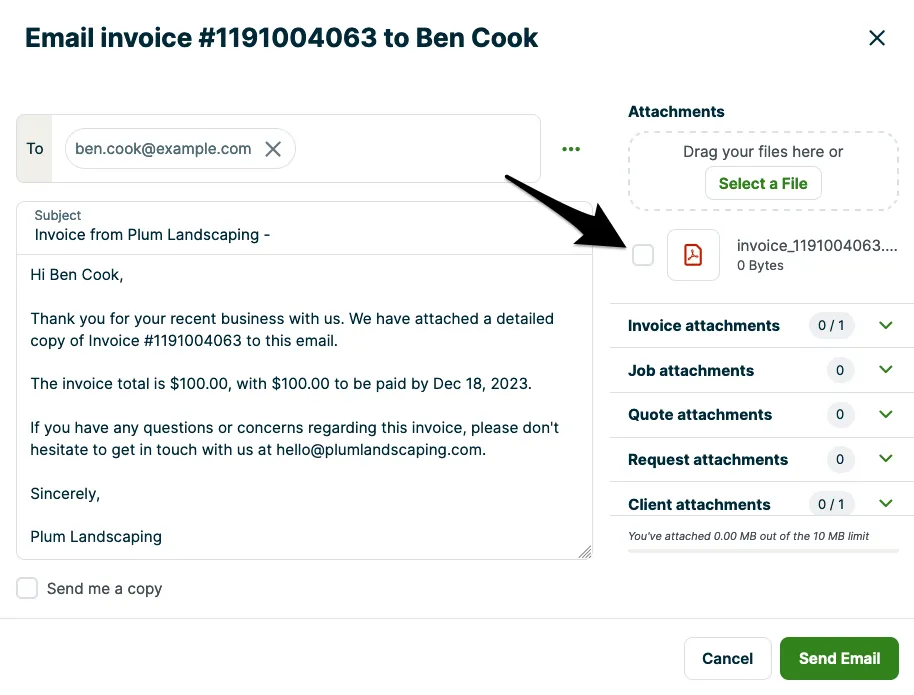
When adding an attachment to an email, you have the opportunity to include an internal attachment (which will then make it client-facing) or upload a file from your computer. You will see a progress bar on the attachment screen to let you know when your file sizes are approaching 10MB.
By default, invoice and quote PDFs are not automatically attached when sending an invoice or quote by email. Your client will be prompted to view their work in client hub where they can interact with that item in a way they can’t with a PDF. For quotes, this includes the ability to pay deposits, select optional line items, approve the quote, or request changes. For invoices, clients can pay that invoice directly in client hub with Jobber Payments.
Add attachments to emails
There are a couple ways to include a PDF copy of a client’s quote or invoice for their records:
- From client hub, on quotes, invoices, and receipts there is a button for Download PDF that clients can use to save a copy of the PDF to their device.
- You can attach a PDF when sending a quote or invoice via email. The email message preview features options for attachments along the right side. If you would like to upload attachments such as photos to the email, click Select a File. To add the PDF of this item, check the box to attach the PDF.
Where can notes be added in Jobber?
There are a multiple places to leave internal notes throughout your workflow, including:
- Clients
- Requests
- Quotes
- Jobs
- Visits
- Invoices
Note: There is no notes field on properties. Notes left on visits are added as job notes and will appear in the internal notes and attachments section on a job as well as anywhere the job notes are linked.
Notes can be viewed and added from both Jobber.com as well as the Jobber app.
Who can view notes?
When notes are added, they are internal by default, so your client will not see them. The notes field can also support attachments like photos or files. These attachments can be selected when sending emails if you need to share them with your client.
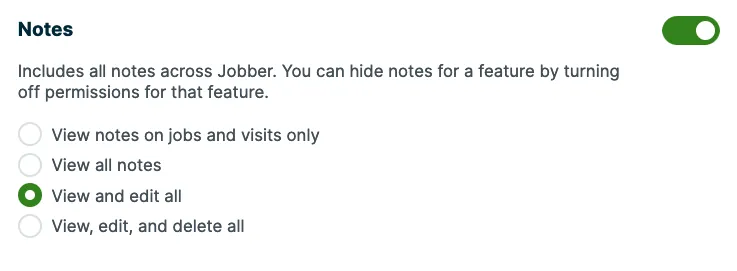
Notes are viewable to all admin users or to team members with the user permission setting for notes. When the notes permission is set to ON, users can view all notes (unless View notes on jobs and visits only is selected).
To hide notes from a user, you need to remove their permission to access the item where the note is saved. For example, a user who does not have the invoice permission setting would not see invoice specific notes.
Actions on notes
Once a note is saved, there are some actions you can take on the note, including:
- Editing the note
- Pinning a note to the top of the list
- Linking a note to other work items
- Viewing GPS waypoints
- Mention a team member
- Delete a note
Edit a note
To edit a note:
- Start by navigating to the client, request, quote, job, visit, or invoice where the note is located.
- Find the notes field on that page:
- On the client’s profile, the internal notes and attachments section is located along the right side of the page, below the client’s billing history and saved payment methods.
- Notes fields also appear on requests, quotes, jobs, and invoices. The note field may be along the right side of the page, or at the bottom.
- From the notes, click the Pencil icon to edit.
- Make your changes. Editable fields include:
- Note content: The main text of the note.
- Attachments: Images or files added to the note appear below the note text.
- Linked items: Notes can show where they are linked in your workflow (for example, to a job, request, or other records).
- Click Save to submit your changes.
Pin a note to the top
When multiple notes are present in a client’s profile, you can pin important notes that your team needs to be aware of for quick reference.
Note: Notes can only be pinned at the client level.
To pin a note to the top:
- Start by navigating to the client, request, quote, job, visit, or invoice where the note is located.
- Find the notes field on that page:
- On the client’s profile, the internal notes and attachments section is located along the right side of the page, below the client’s billing history and saved payment methods.
- Notes fields also appear on requests, quotes, jobs, and invoices. The note field may be along the right side of the page, or at the bottom.
- From the note, click the More actions (three dot icon) then select Pin note to top.
Note: The ability to pin a note is currently only available in Jobber.com.
Link a note
Notes can be linked from the place where they originate in Jobber to more items downstream in your workflow. This ensures important detail stay visible wherever they’re needed.
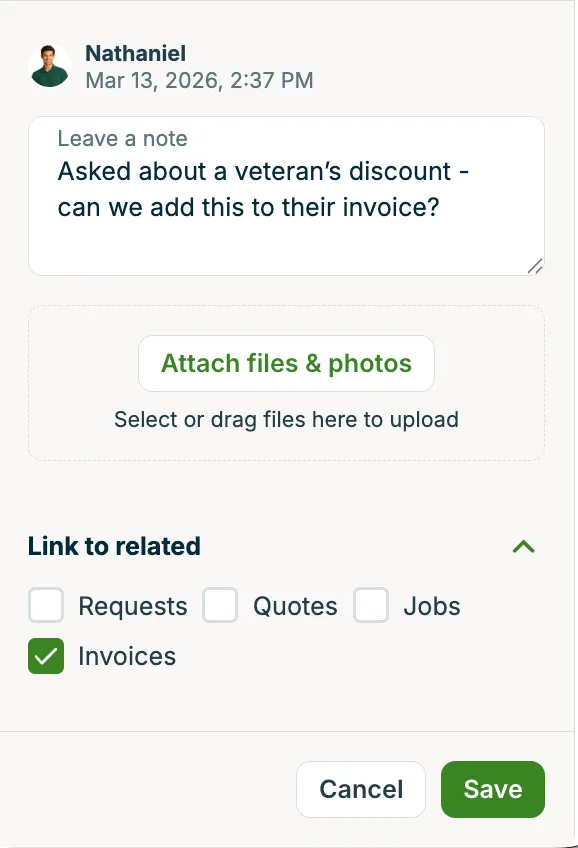
By default, notes are linked to all downstream items. For example, a note left on a client will be linked to any requests, quotes, jobs, or invoices for that client unless the linking options are deselected.
At the bottom of the note, you’ll see information about where this note is linked.
In the example below, the note was created on the client and is linked to related requests, quotes, jobs, and invoices. On downstream items, it will appear as a “linked note”, while the original location identifies it as a client note.
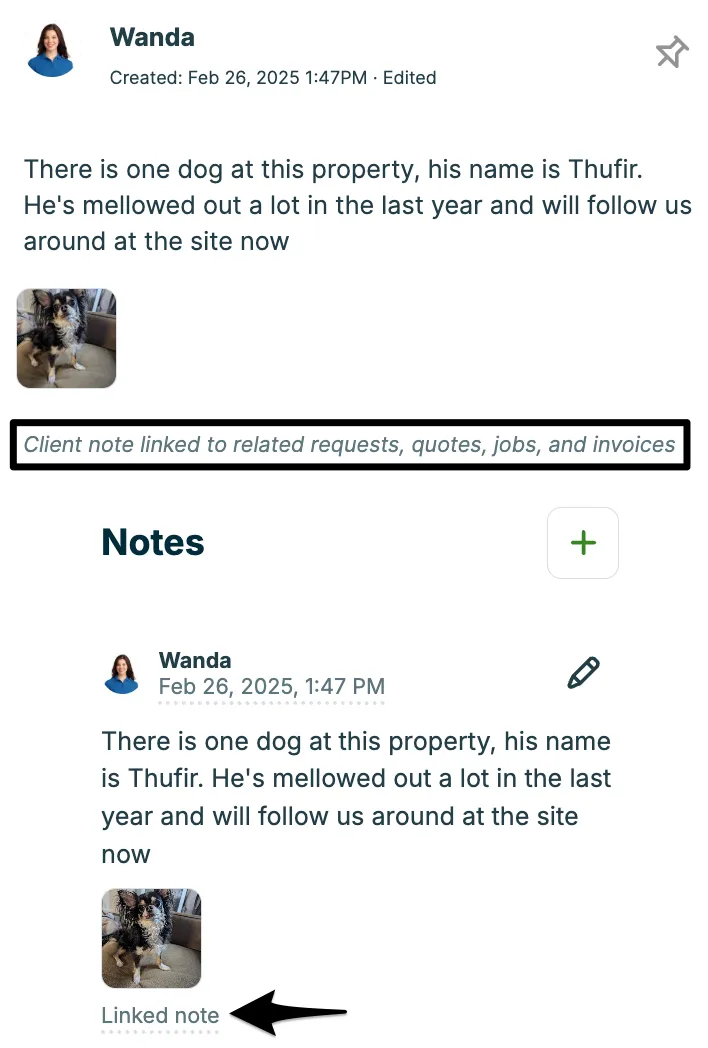
If you make changes to a note, it will change that note everywhere it is located. If a note is edited by someone other than the first person who wrote it, there will be a timestamp of when it was changed, along with the editor’s name.
To link a note:
-
Start by navigating to the client, request, quote, job, visit, or invoice where the note is located.
-
Find the notes field on that page:
- On the client’s profile, the internal notes and attachments section is located along the right side of the page, below the client’s billing history and saved payment methods.
- Notes fields also appear on requests, quotes, jobs, and invoices. The note field may be along the right side of the page, or at the bottom.
-
From the note, click the Pencil icon.
-
Expand the Linked to related section, then check off the places that this note should be linked.
-
Click Save.
GPS waypoints on notes
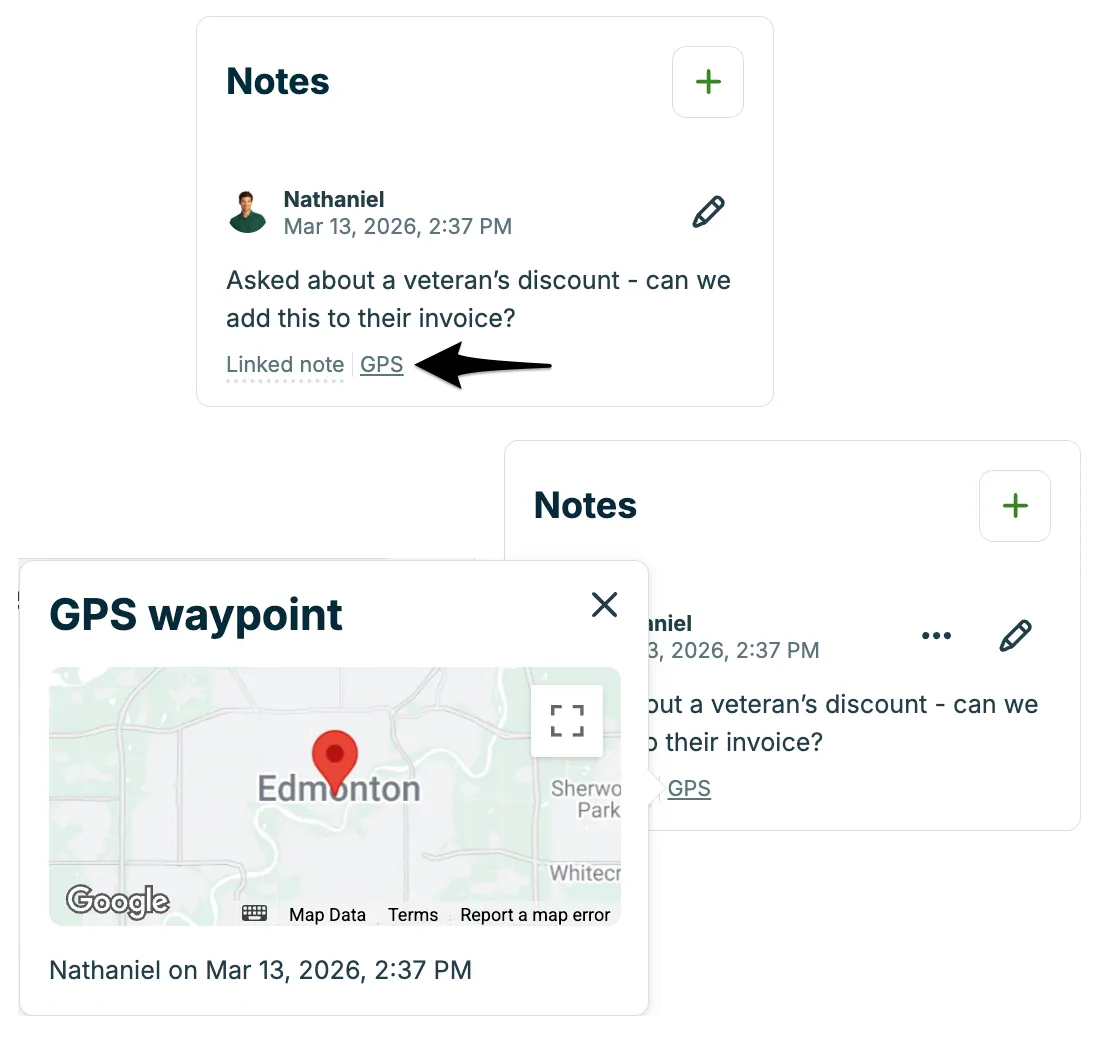
When a note or attachment is added using the Jobber mobile app, it creates a GPS waypoint. On these note cards, you’ll see a GPS indicator.
GPS waypoints record the location where certain actions are performed in Jobber, helping you verify where work activity took place.
To view the location where the team member added the note, click the GPS indicator. This will display the location where the GPS waypoint was recorded.
You can also view this information in more detail in the GPS Waypoints report, where you can see a list of recorded actions along with the time and location they occurred.
Learn more about GPS waypoints.
Export a note with multiple attachments
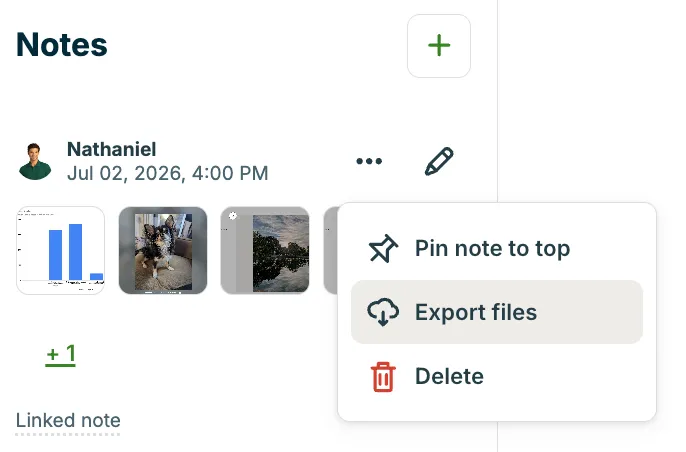
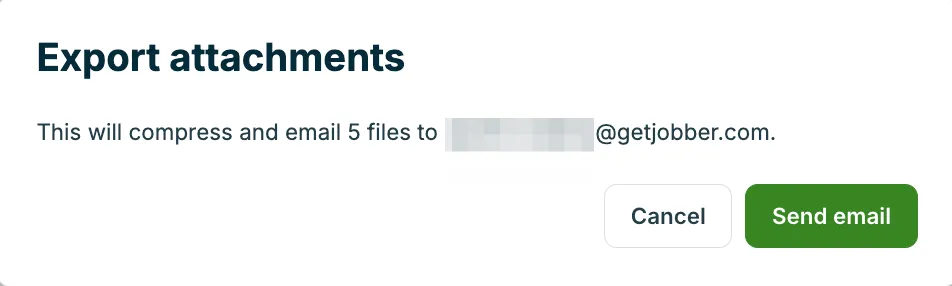
You can click on any attachment in a note and save it manually. If a note contains five or more attachments the attachments can be exported in a single zip file.
If you have less than five attachments in a note, open each note individually and copy or save the information you need. The option to export is only available when there are five or more attachments within one saved note.
To export attachments:
- Make sure there are at least five attachments saved in a single note. The option to download only appears with a minimum of five attachments.
- From the note, click the three dot icon, then select Export files.
- Click Send email to send the zip file to the same email address you use to log into Jobber.
Delete a note
- Start by navigating to the client, request, quote, job, visit, or invoice where the note is located.
- Find the notes field on that page:
- On the client’s profile, the internal notes and attachments section is located along the right side of the page, below the client’s billing history and saved payment methods.
- Notes fields also appear on requests, quotes, jobs, and invoices. The note field may be along the right side of the page, or at the bottom.
- From the note, click the three dot icon (More actions) then select Delete.
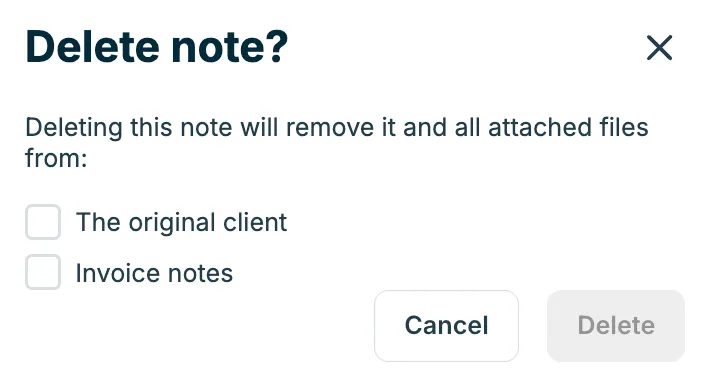
- Confirm that this note should be deleted, by selecting Delete. If the note has been linked, you will need to acknowledge that the note will be removed from anywhere it appears down stream.
How to know when there is a new note
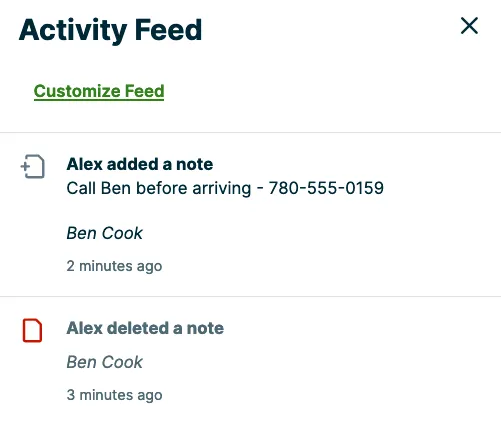
When a team member leaves a new note (either from the Jobber App or from jobber.com), admin users will be notified via activity feed. The activity feed notification will show a preview of the note, the client’s name, and (if the note was left a quote, job, or invoice) the item number. Click the item from the activity feed to view the page where the note was left.
Mention teammates in notes
Available on the Plus plan.
On the Plus plan, you can @mention a teammate directly in a note to flag important information and notify them right away. When you tag someone, they receive a notification in the Jobber app and in their mentions feed, which is a personal view that shows only the notes where they’ve been tagged. This can be found by clicking on the bell icon.
To mention a teammate in a note:
- Navigate to the client, request, quote, job, visit, or invoice where you’d like to leave the note.
- In the note text field, type @ followed by the teammate’s name, or type @admins to notify every admin on the account at once.
- Select the teammate (or @admins) from the suggestion list that appears.
- Finish writing your note, then select Save.
A few things to keep in mind about @mentions:
- You can only @mention teammates who have permission to access the work object where the note is saved. For example, a teammate without invoice access cannot be mentioned in an invoice note.
- The mentions feed shows only notes where you’ve been tagged. It’s personal to each user. Non-admin users see only the mentions feed; admin users also have access to the full activity feed.
- @mentions are available in both the Jobber app and on Jobber.com.
- On Jobber.com, you can hover over the read receipt to see the full list of who’s read it. To see whether a teammate has read the note they were mentioned in:
- read by [name] if one person is mentioned
- read by everyone once everyone mentioned has viewed it
- read by [name] + [x] others while some are still unread
- When you mention @admins, hover over the mention to see the full list of admins who were notified.