Overview
There are two kinds of jobs in Jobber, one-off jobs and recurring jobs. Recurring jobs are used for:
- Jobs that have multiple visits with a repeating schedule. For example, you visit the client every Tuesday
- Jobs where you invoice your client on a schedule. For example, you bill once per month or after each visit.
What’s New in Jobs
We’ve refreshed the Jobs experience in Jobber to make it easier, faster, and more intuitive for you to create and manage jobs. These updates will start appearing in your account automatically—no action needed.
What’s changed with creating jobs:
- New, cleaner look with a refreshed header style.
- Instructions field has moved—this is now located in the schedule section of the job creation screen.
- Smoother workflow for selecting clients and properties.
- Redesigned internal notes for clarity.
- A sticky save bar, so saving progress is always just a click away.
- Permissions update: Users without access to requests will no longer see request details when converting a quote to a job. Learn more about user permissions.
Improvements to editing and viewing jobs:
- Job View/Edit: Internal notes now live in the right sidebar, giving you more room to work.
- Edit job details directly on the page without opening new windows. Refreshed style for consistency with the Job Create page.
Removed features:
- “Base this Job off a Quote” has been retired, but don’t worry—quotes can still be converted to jobs with all line items and totals carrying over automatically.
- The calendar preview that was an option while creating your job schedule is being phased out and will soon be replaced by a built-in, interactive mini-schedule. This is not to be mistaken with the month view of the schedule, which is remaining a part of the new schedule.
- Some redundant details when converting quotes to jobs have been cleaned up to reduce clutter.
Why this is better:
- Faster workflows with less clicking and scrolling.
- More space to work with a simplified, modern interface.
- Clearer design that matches the rest of Jobber, making it easier to find what you need.
How to create a recurring job
You can create a job from many places on Jobber.com, including:
- the Create button from the side navigation
- the More button on the schedule
- the Create button on a client’s profile
- the Convert to Job button on an approved quote
- Select More then select Convert to job on a request
Recurring jobs can also be created in the Jobber App. Learn more about Jobs in the Jobber App.
Select a client and add job details
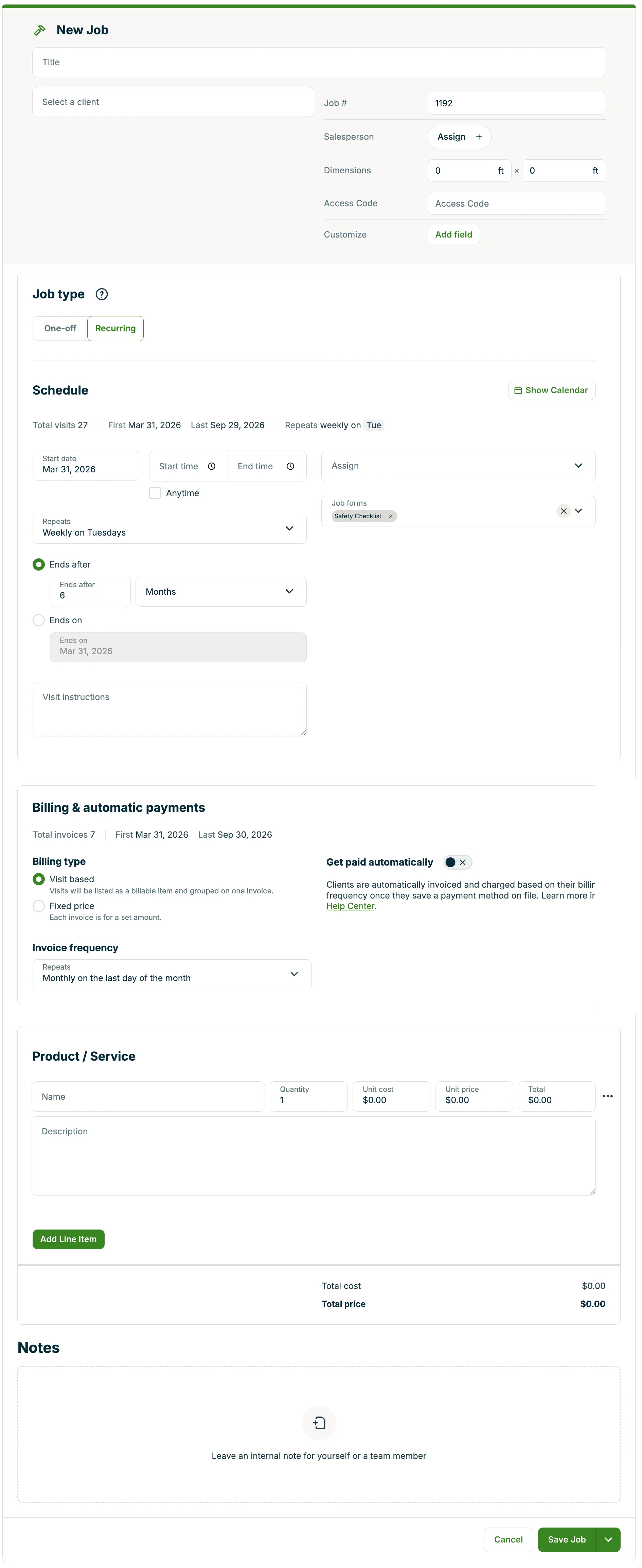
When creating a new job, start by filling in the job title in the Title field. This typically the name of the type of work you’ll be doing. This will be visible as the name of your job on on your schedule in Jobber.com as well as on the Jobber mobile app. The job title will not show to the client and is often used as a description of the job that you will be doing.
Next, select a client. This is the person or company that you are providing these services to. To add a client, start typing in the Select a client field then choose a client from the list, or click Create New Client if they are not yet a client in your Jobber account. If you are converting a request or a quote to a job, the job will automatically be for the same client as the request or quote.
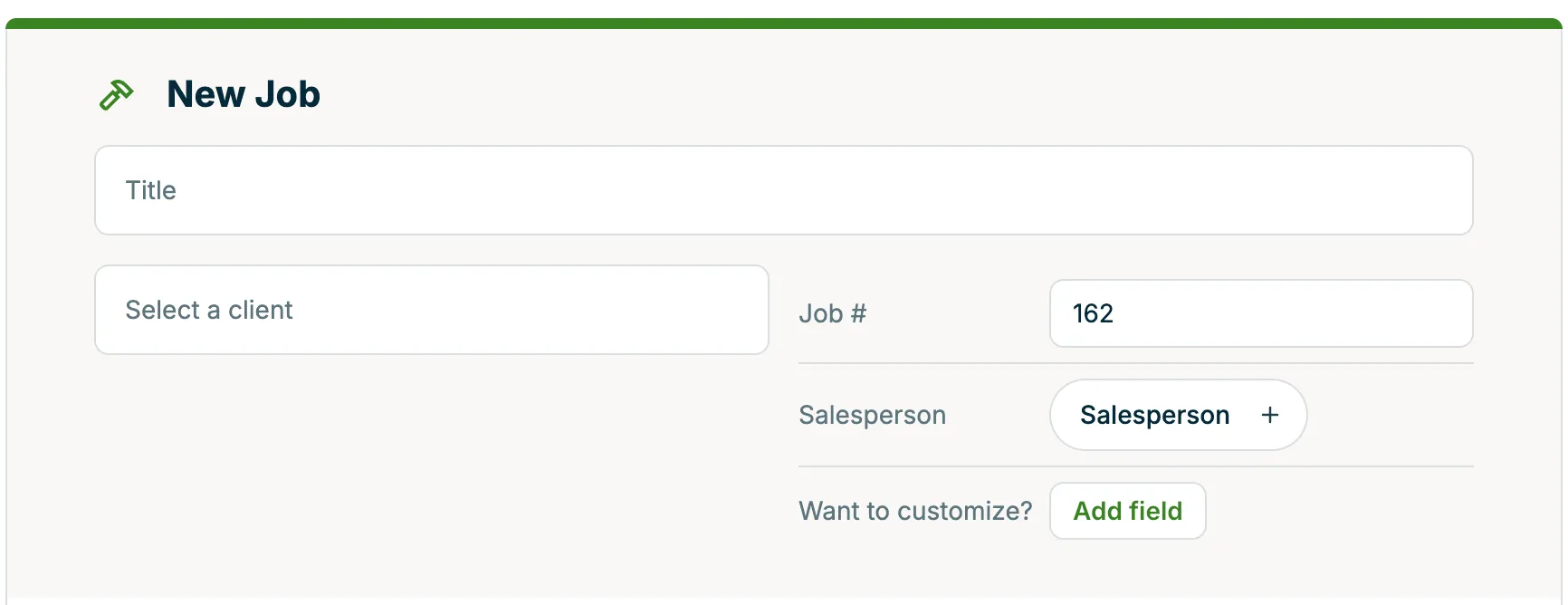
On the right of the job title and client name is the job details. This includes the job number and salesperson. To change the job number, click Change then enter a new job number. Job numbers count upwards from the highest job number currently in your account. If your current highest job number is #123, the next job you make will default to #124.
If you have any job level custom fields set up, they can be filled out while creating the job. To add a new custom field (that will appear as a field on all job), select the Add field button.
Set up your repeating schedule
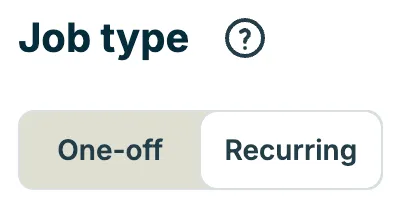
To create a recurring job, make sure to select the Recurring Job tab under Job Type.
Next, is setting up the schedule for this job. Since this is a recurring job, it will have a schedule with repeating visits.
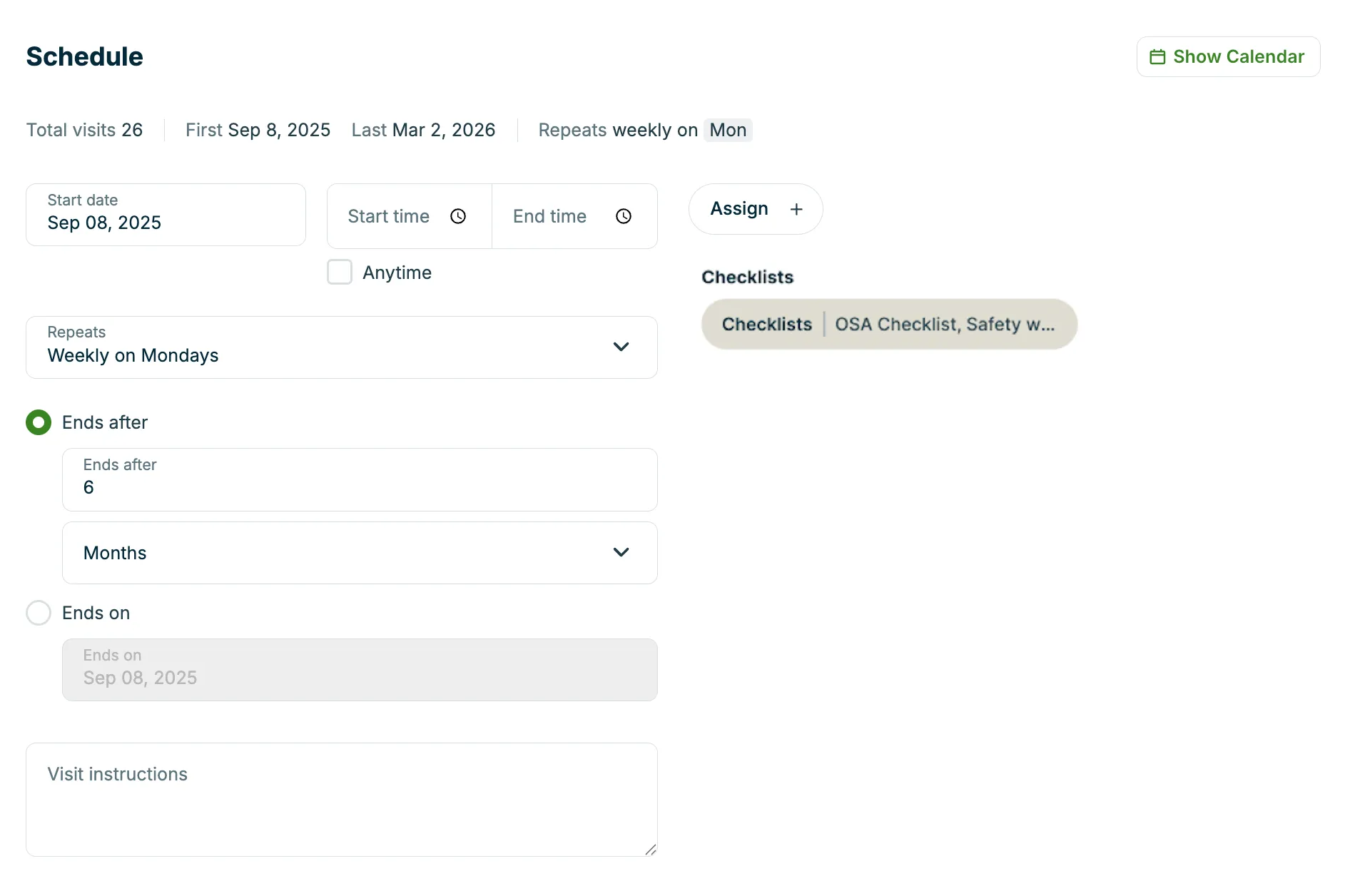
At the top of the schedule section, you’ll see a quick reference showing how many visits will be created for this recurring job. It also displays the date of the first and last visits along with the repeat schedule, so you can easily confirm the details before saving.
- To set the schedule for the job, select a Start Date for the job. This is the day the contract begins. To help with your scheduling there is a preview of the current month’s schedule. Select Show Calendar or Hide Calendar to view or remove the preview.
- Select start and end times for your visits, or check the Anytime box. If no start and end time is entered, the visits for this job will be anytime visits.
Once the start date and times are filled out, if you are using arrival windows you’ll see a section for Arrival windows appear with the duration that was set in your work settings.
Learn more about arrival windows. - Click Assign to add team members who will be assigned to the visits for this job. If no users are selected, the visits will be unassigned and can be assigned later. Learn How to Remind your Team about their Assignments.
- Click the Checklists heading to add checklists to this job. Checklists attached at the job level will add checklists to all the visits for this job. Checklists are customizable forms that can be attached to jobs (or assessments) so your team can fill them out in the field. Checklists are a good way of collecting information while on a visit and standardizing the way information is entered when different employees are filling out the forms.
- Select if the job Repeats. This is how often you’ll be going out to visit the client as part of this job.
- Visits can repeat weekly, biweekly, monthly, or on a custom schedule. The custom schedule gives you flexibility to schedule weekly, monthly, or annually. You can also select multiple days. For example, you could use the custom schedule to schedule weekly visits on Mondays and Wednesday. Or you could use it to set monthly visits on the 1st and 3rd Fridays of the month.
- The “As Needed We Won’t Prompt You” option is for if you don’t want to schedule visits on this job right now. If you select this Jobber will make no visits, and the visits can be made later.
- Enter when this job ends, you can select either:
- Ends after: This job will automatically end after a select amount of time, for example, 6 months.
- Ends on: This is the exact date the job will end. For example, January 4, 2027.
- The Instructions field is where you can add directions for your team for this job. This field is internal so your client won’t see the instruction, but they’ll carry forward onto all visits for this job so that your team knows what to do when they get there. Instructions for a particular visit can be edited from the schedule. Editing the instructions on the visit changes the instructions for that particular visit only.
Set up your billing schedule
Next is setting up the billing schedule for this job.
Along the top of the Billing & automatic payments section, you’ll see the total number of invoices that will be generated as part of this job, and well as the dates of the first and last invoices from this work.
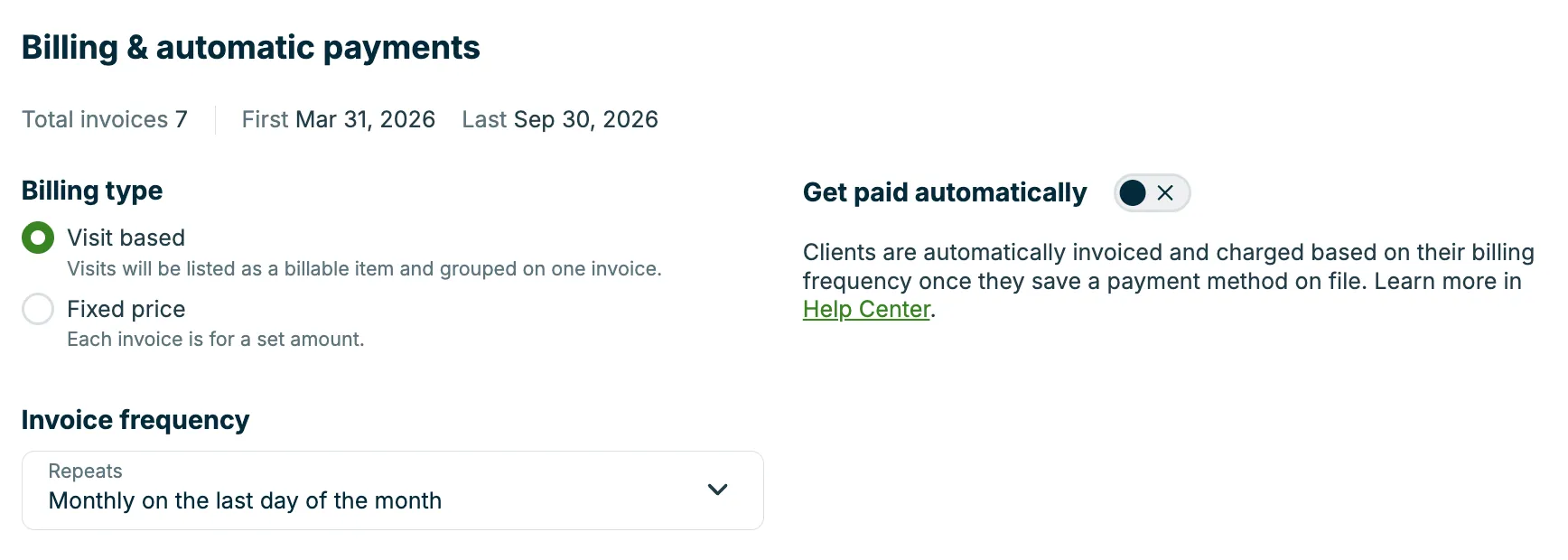
Since this is a job with a repeating schedule, you will have options to invoice this job multiple times according to a schedule. Recurring jobs can be invoiced:
- per visit where the client will be charged for each visit. For example, this would be used if you charge the client $50 per visit, or
- as a fixed price job where they are invoiced a set price per invoicing period. For example, this would be used if you charge the client $150 per month no matter how many times you visit them.
Once you’ve selected how you want to invoice, select how frequently you want to invoice from the When do you want to invoice dropdown:
- Monthly on the last day of the month: On the last day of the month, an invoice reminder will be created for the job, and this job will go into “requires invoicing” status.
- After each visit is completed: After a visit is marked complete, an invoice reminder will be created for the job, and Jobber will prompt you to invoice.
- As needed-no reminders: Jobber won’t prompt you to invoice for this job and it won’t go into “requires invoicing” status. This is used if you are not invoicing for this job, or if you are invoicing for it in another system.
- One the job is closed: When the entire job is closed, an invoice reminder will be created for the job, and Jobber will prompt you to invoice. For recurring jobs, this will typically be after you’ve already had many visits since that will be the point at which you’re closing the job.
- Custom schedule: You can select a custom schedule for when the invoice reminders will be generated. For example, I want to be reminded to invoice for this job on the 14th and the 28th of each month.
Automatic payments for recurring jobs
On select plans, recurring jobs will allow you to set up automatic payments using Jobber Payments since recurring jobs typically will have recurring payments. To enable automatic payments, toggle the automatic payment switch to ON, however the client will need to have a stored card on file to use automatic payments. Invoices will be created automatically based on the invoicing schedule and the client’s credit card will automatically be run.
Add the products / services you’re offering
Next add the products and service you’re offering on this job as line items. To add a new line item, from the product / service section, click the button for Add line item.
To rearrange invoice line items, hover over the line item then click the 6 dot icon next to the line item’s name and drag to rearrange.
Note: A job can support up to 100 line items.
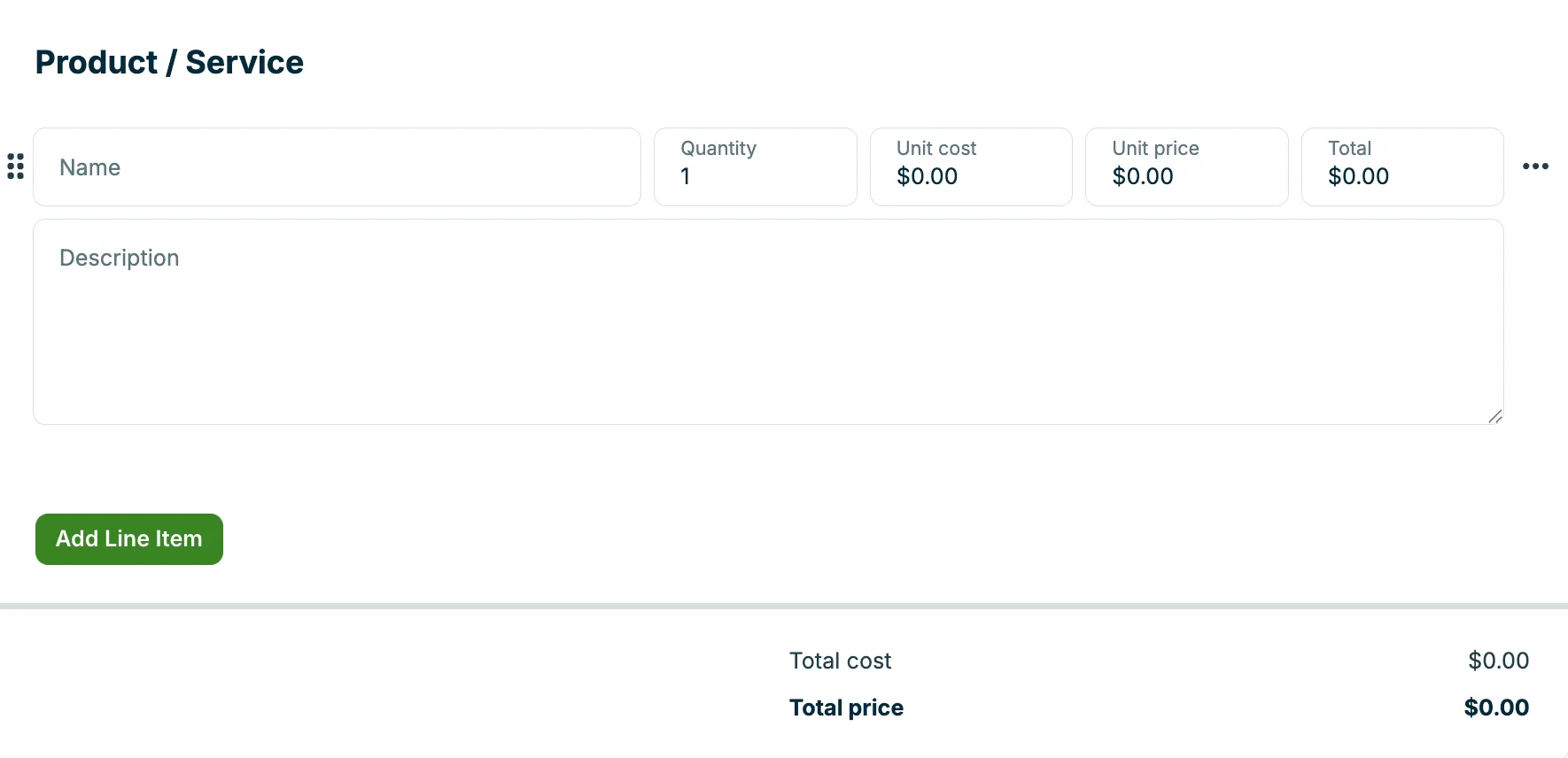
Line items can be selected from your products and services list, or added as a custom line item for this job.
For each line item, enter a:
- Name: The name of the product or service.
- Description: A description of the product or service.
- Quantity: How many of this item you’re offering.
- Unit cost ($): The expenses you incur to provide a product or service. This option is available on select plans as part of our markup functionality. Learn more about our current pricing.
- Unit price ($): The amount you charge customers for a product or service.
- Total: This is calculated automatically based on the quantity and unit price for this item.
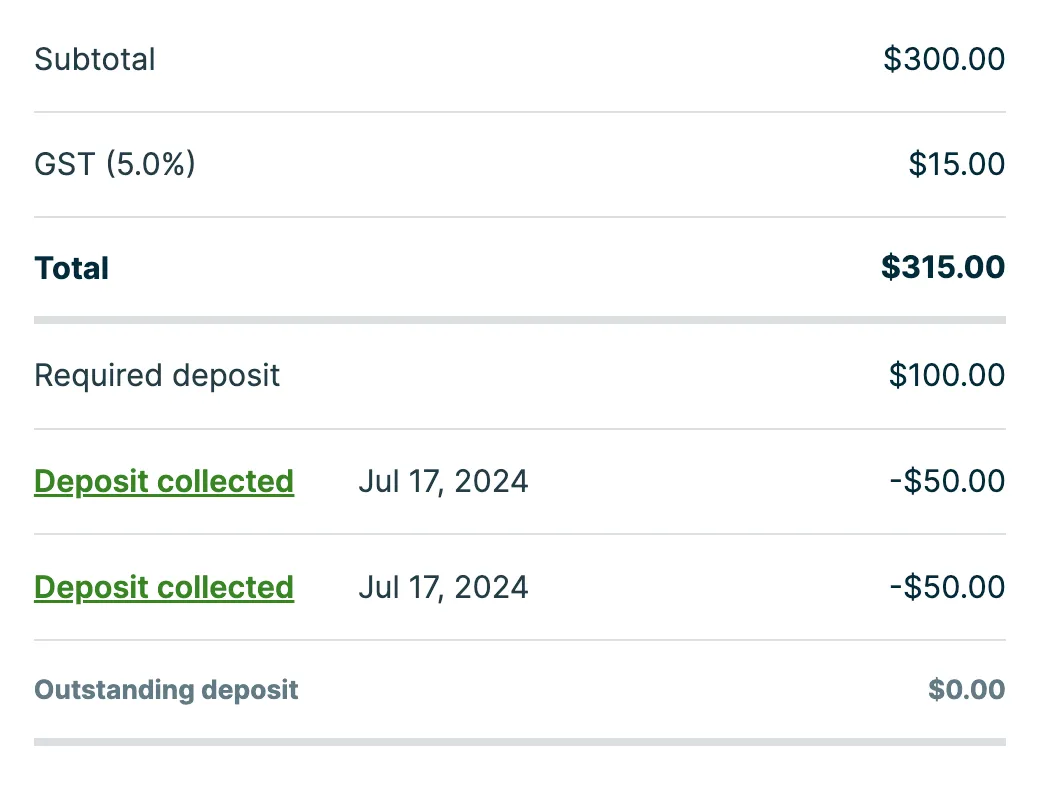
The total of the line items will create the subtotal, then the property’s tax rate will be added to create a total for this job. When a quote with a required deposit is converted to a job, the deposit information will be visible when creating or editing the job. The deposit information does not appear on the saved job, only the create or edit screen.
Custom visits, or visits with different pricing or services
Visits are automatically created with the same line items as the job. However, you may sometimes need to charge for something different on a specific visit—such as a one-time service or additional products.
In these cases, you can use custom visit line items to add or adjust line items for an individual visit without changing the entire job.
To customize a visit, click the pencil icon beside a visit in the scheduled visits section to edit it, then enter the custom visit details.
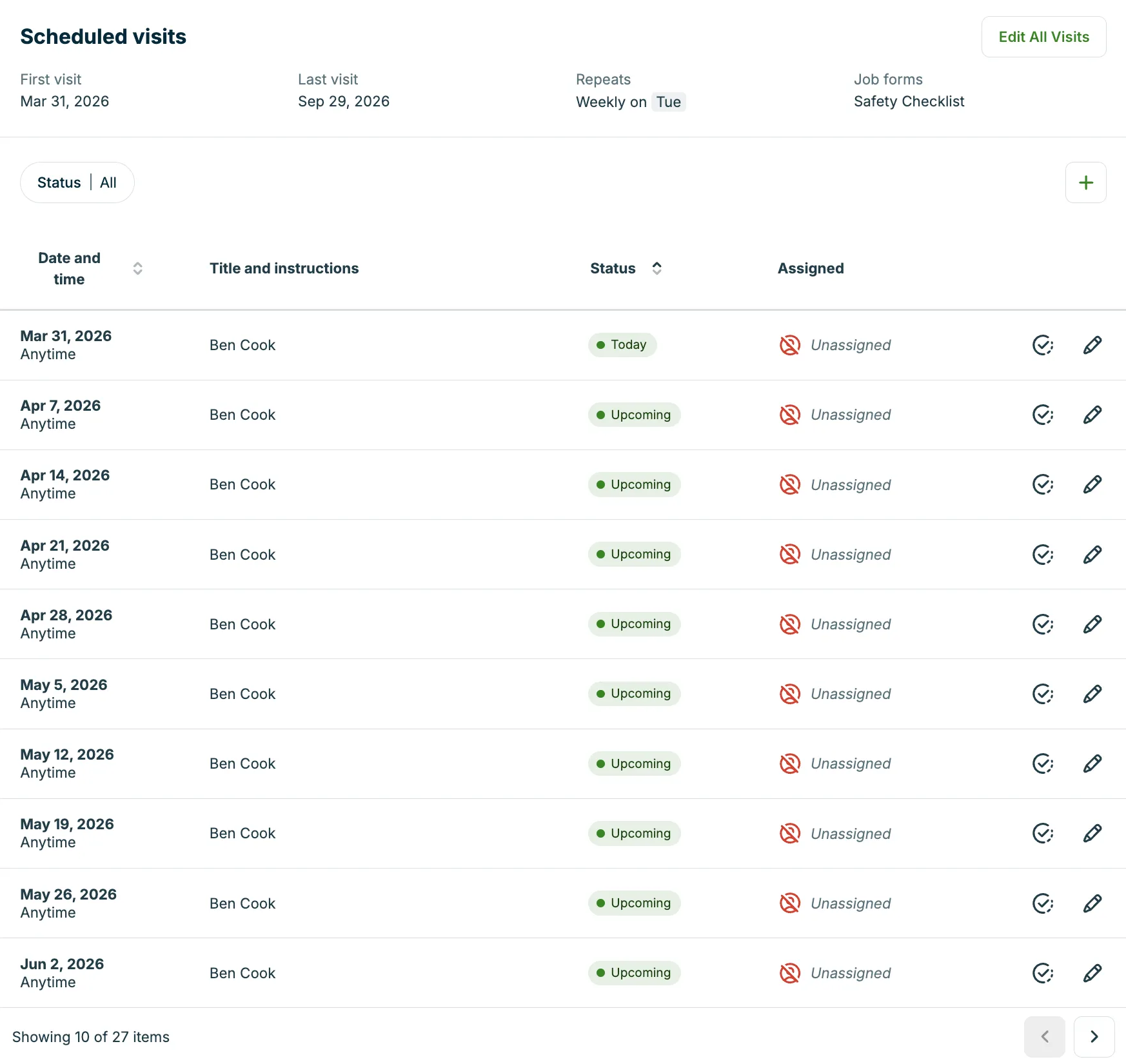
From the edit screen of the visit, there is a section showing the line items and their quantities. To update the quantity, you can type the new number in the QTY field. To remove a line item, click the red trash can icon. If on this visit, you’ll be adding an extra service or charging for an additional product, click + to add the line item to this visit only.
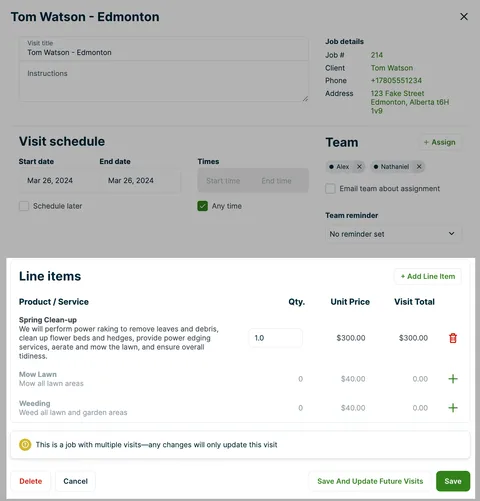
After you save, since the visit is now different than the job (which you can think of like the overall work contract), on the job you will see a list of the visits that vary from what appears on the job located under the line item name. To see the details of the changed quantities, navigate to the visits section and open the visit for the listed date(s).
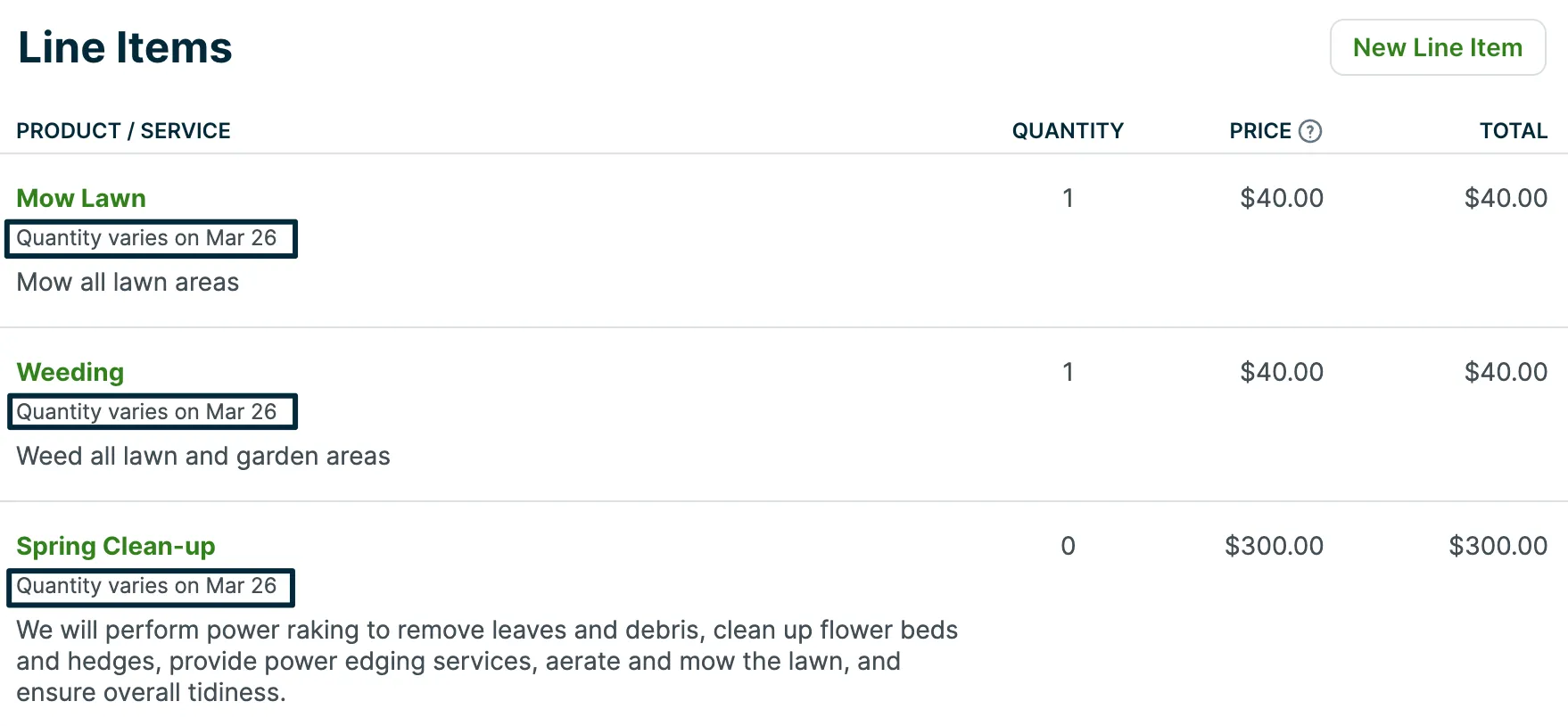
When an invoice is made, the custom visit line items will only transfer for the visit dates they have been put on.
Note: If a custom visit line item is used on a fixed-rate billing job, then it will not transfer to the invoice. This is because fixed-rate billing jobs are not invoiced based on the visits.
Add internal notes and attachments for your team
You can also add notes, photos, or attachments for your team to see in the Internal notes & attachments section. Clients cannot see these notes. Click the notes section to open up the field to type a note. Attachments can be dragged right into this section.
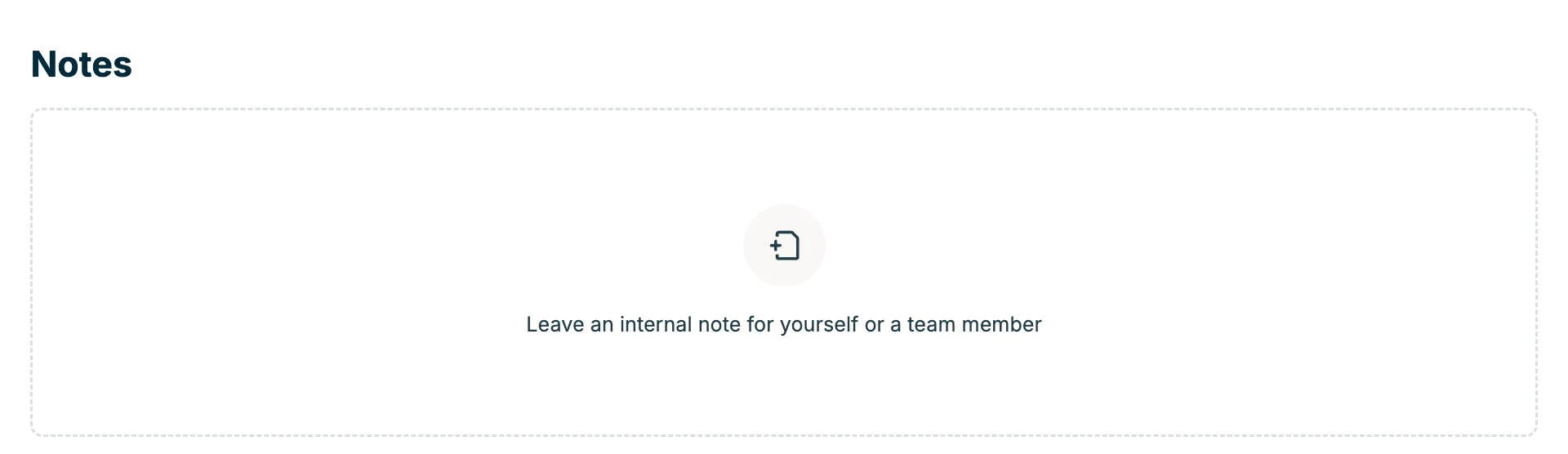
Learn more about internal notes and attachments.
Save the job
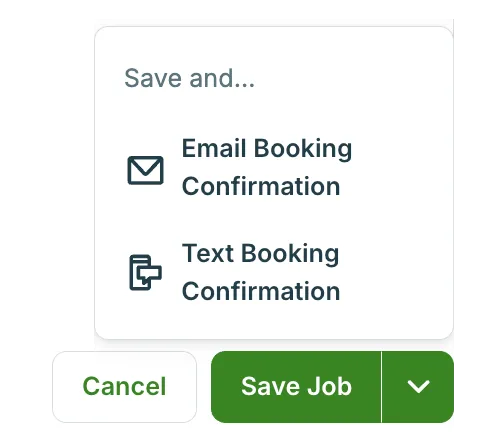
Lastly, make sure you save the job! When creating a new job, there are two save buttons:
- Save job will save this job and then take you of of the edit screen, back to the top of the job so you can look over the changes you have made.
- Save and… has a menu with options to save the job as well as another action, all in one click.
- Email booking confirmation sends a booking confirmation to the client via email.
- Text booking confirmation sends a booking confirmation to the client via text message.
Make edits on jobs
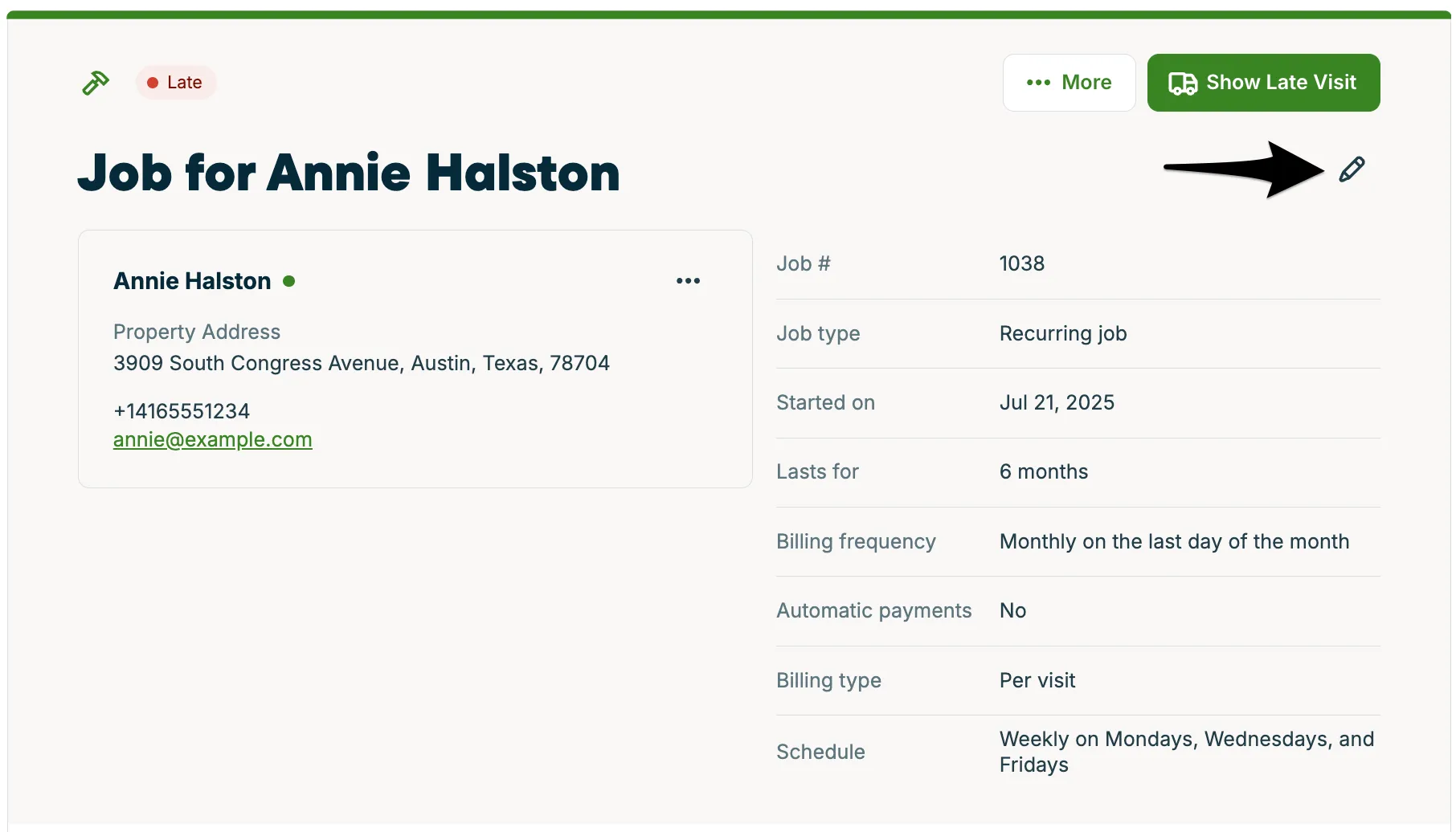
You can update a job directly from the job page.
To edit a job:
- Click Jobs from the side navigation and locate the job you want to update.
- On the job page, find the section you want to edit, then click the pencil icon in that section.
- Make your changes.
- Click Save.
Repeat these steps for any other section of the job you want to update.
You can edit each part of the job individually, so it’s easy to update specific details without leaving the job page.